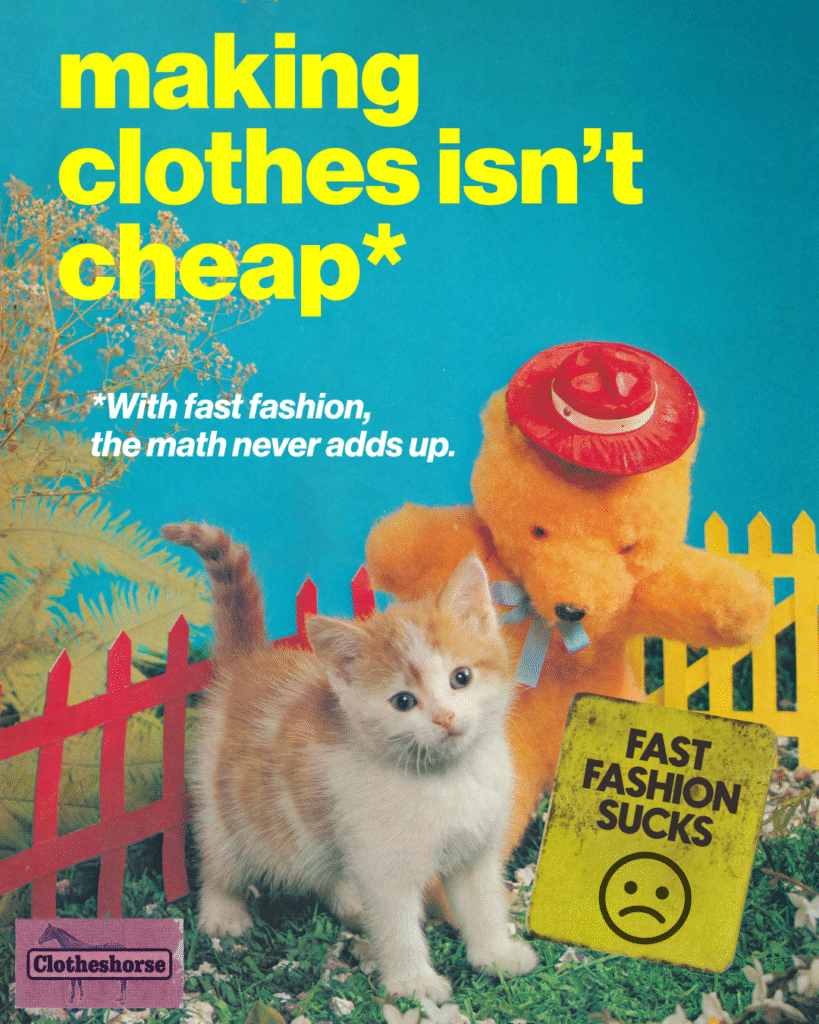
Making clothes isn't cheap...with fast fashion, the prices never add up!
 

Our perception of price and value
is kinda broken.

Clothing costs less now than it did in the 1990s…despite everything else around us costing so much more!
What do you think is a fair price for a brand new t-shirt? $5? $20? $50?
If you answered “$5,” you wouldn’t be wrong. We expect clothes to be super inexpensive, because we are surrounded by low priced, highly profitable clothing options. Fast fashion has been offering us artificially low prices for decades, selling us the illusion that a new t-shirt really can cost $5. And it’s easy to trick us because most of us know very little about how clothing is made.
When you take a step back and start to consider the elements of an article of clothing, suddenly fast fashion looks like a bad deal…let’s take a look!
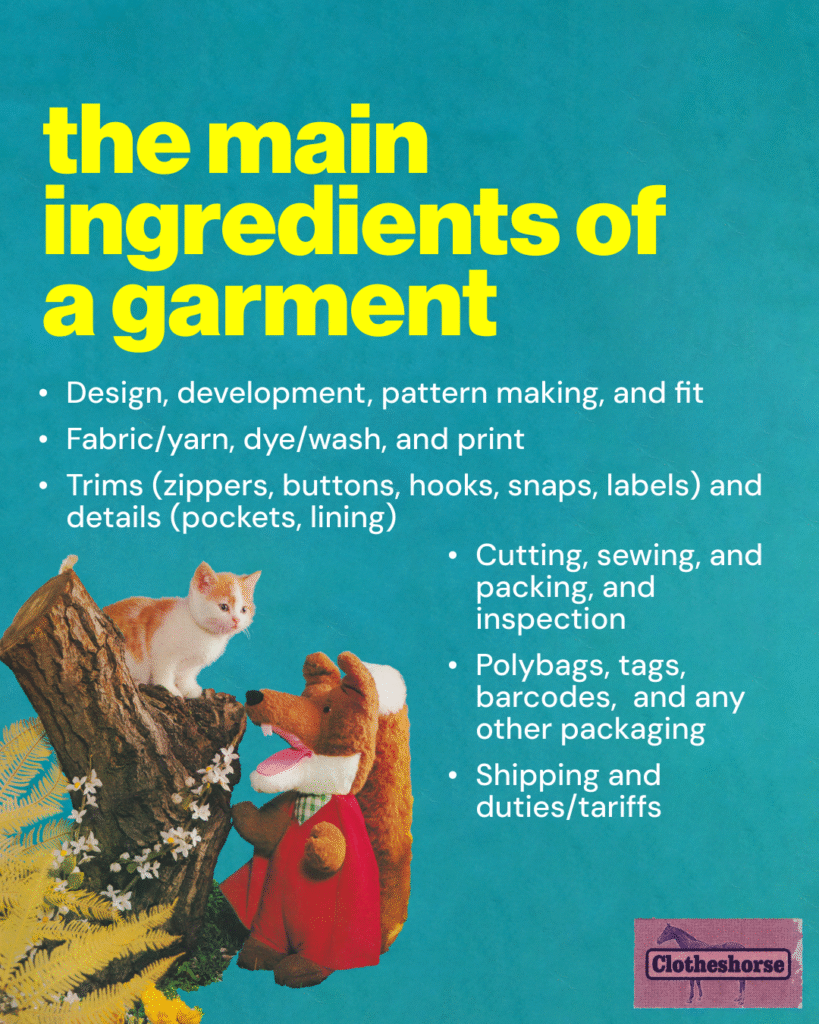
The main ingredients of a garment: --Design, development, pattern making, and fit --Fabric/yarn, dye/wash, and print --Trims (zippers, buttons, hooks, snaps, labels) and details (pockets, lining) --Cutting, sewing, and packing, and inspection --Polybags, tags, barcodes, and any other packaging --Shipping and duties/tariffs

Fabric

In the world of fast fashion, this is the most expensive part of a garment…but only because workers are underpaid.
  • Whether it’s cotton, silk, or polyester, the fabric is created in a fabric mill. It may also be dyed and printed there.
  • Many fabrics are also washed to create a softer texture or a “worn” appearance. Fabrics will also be treated to mitigate flammability, wrinkles, and odor or add water resistance.
  • When retailers are cutting costs (to make more profit selling clothing at a discount), fabric is the first thing to be cheapened. We live in the golden era of polyester thanks to the fast fashion-ification of the apparel industry.
  • A garment’s price should reflect the weaving/knitting, dyeing/washing, and printing, as well as the transportation of the fabric and all of the workers involved in making the fabric. Don’t forget the water, energy, treatments, dyes, and inks.

Design & development

A hidden cost that is often forgotten by everyone but the finance dept.
  • Designing clothing requires a team of designers (technical, print, patternmakers, and design). More and more brands are skipping the expense of designers and using AI instead. There’s also an entire team that manages the production of these garments, handling all of the negotiations, timelines, and details with the factory.
  • Samples are sent back and forth between the design team and the factory until the sample is approved for production.
  • Fit technicians hold fittings with professional fit models wearing the samples, to get the fit just right. Often a garment will require several sessions
  • These expenses (all of these salaries, samples, and equipment) ARE a part of the price you pay as a customer. Fit sessions and sample revisions are often dropped to keep those prices lower. The result? Less desirable garments that don’t fit well.

Trims & details

Another opportunity to cut costs…
  • Ever had a dress zipper break on the first or second wear? That’s because nice zippers are expensive! A lower quality zipper can make the difference between a cost that hits the margin target and one that does not.
  • Retailers skimp on lower cost trims, including zippers, buttons, snaps, and hooks because the savings can add up.
  • This is a good time to mention that all of the people involved in making, packing, and transporting those trims also need to get paid.
  • Pockets and linings also cost money from a materials perspective (and of course paying to have them sewn in adds up, too). These details are often cut to hit a lower price point. See also: length in skirts and dresses. One inch cut from 10,000 units = profit!
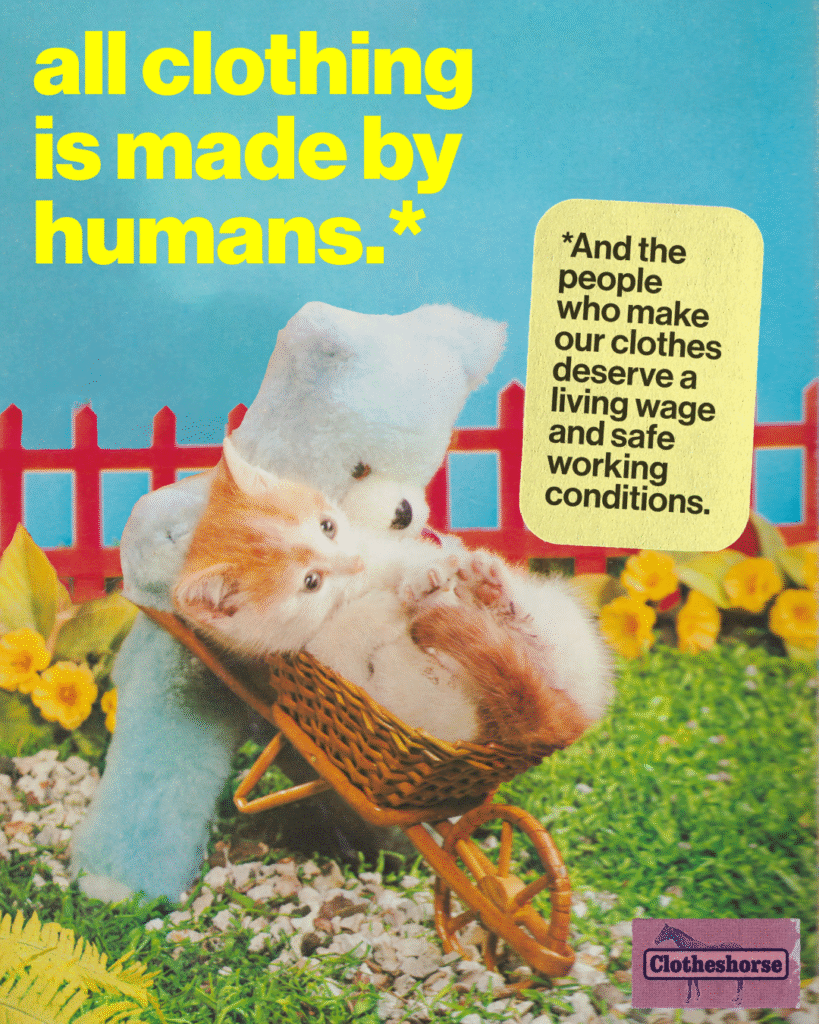
All clothing is made by humans. And the humans making our clothes deserve a living wage and safe, healthy working conditions.

Cutting & sewing

Ever notice how you never hear fast fashion brands talk about their garment workers?
  • Most retailers/brands do NOT own the factories making their garments. But while retailers might not be signing the paychecks of their garment workers, they are directly impacting their pay by squeezing factories on pricing.
  • Humans cut, sew, inspect, and pack every garment we purchase. They add size/brand labels, pack them in polybags, and prepare the boxes for shipping. None of this is done by robots.
  • Remember how I said that fabric is the most expensive part of a garment? It doesn’t make sense when you consider all the humans involved.
  • Other expenses of running a factory: facilities, energy, equipment, taxes…all of the expenses of running a business. When factories are squeezed for lower prices, they don’t do things like clean worker bathrooms or give out pay raises.
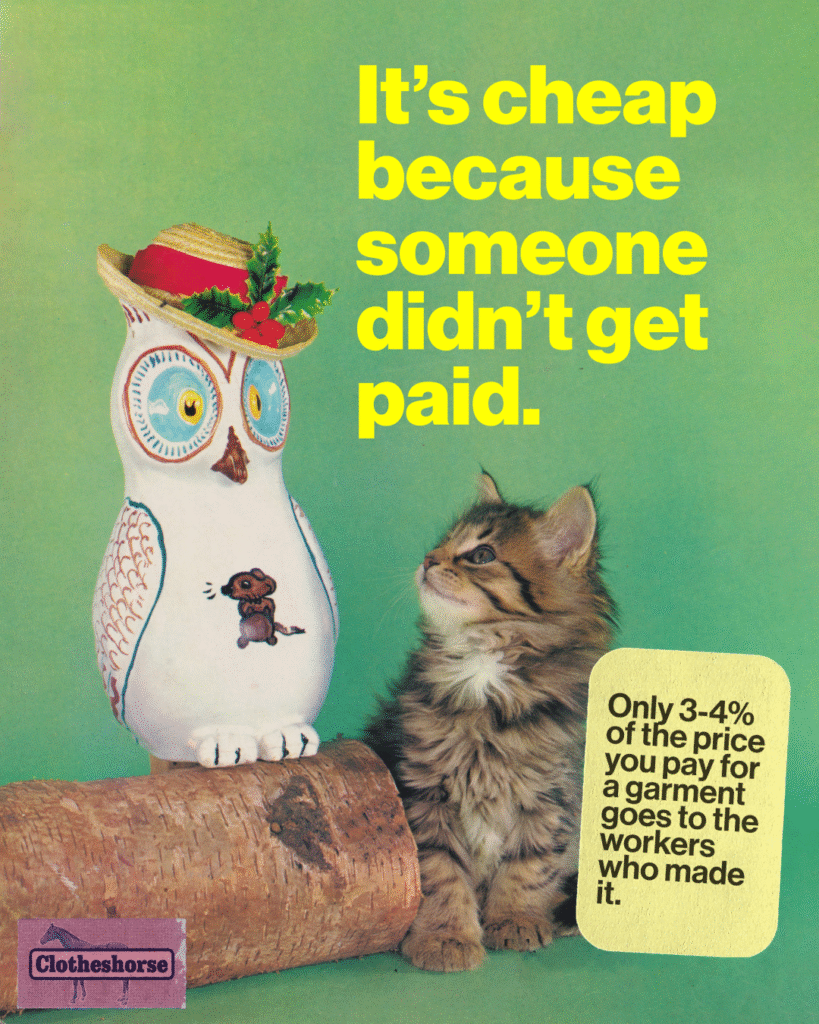
It's cheap because someone didn't get paid. Only 3-4% of the price we pay for a garment goes to all of the people who made it.

Shipping, duties, & tariffs

The boring part that actually impacts the price you pay in a big way!

  • Most clothes are made overseas and getting them to your country is a big, expensive undertaking.
  • Shipping via boat is the most affordable way, but it adds a month to the delivery time. Not an option in the competitive world of fast fashion!
  • More and more retailers opt to ship via airplane, which is much faster. However, it is (at least) 10X the cost of shipping via boat. How do retailers make up for that higher cost? By skimping on everything in the previous slides!
  • Depending on the fabrics and final product, duties and tariffs (import taxes) can be significant. Once again, these are covered–without raising prices–by cutting costs on the previous slides. And even if a garment is made in your country, the fabric and trims likely came from overseas. So tariffs/duties still apply. To be clear: tariffs are paid by brands/retailers and customers (aka US), not governments.

But wait…there’s more!

We’re paying for a lot of other stuff, too!
  • Warehouse + logistics, including buildings, energy, real estate, workers, machinery, and technology.
  • Retail stores and the workers running them. This includes rent, fixtures, energy, insurance, and technology.
  • Marketing expenses like ads, social media, influencer swag, graphic design, SEO, and all of the workers who get that done.
  • FREE SHIPPING. You already know it’s not free, but just a reminder here. Free shipping is covered by creating lower cost garments.
  • RETURNS! With about 3 out of every 10 garments being returned, retailers cover the cost of return shipping and processing by cutting the costs of the garments in the first place.
  • Office roles like accounting, HR, administrative tasks, buyers/planners/merchandisers, executives…and the offices, equipment, and technology they use!
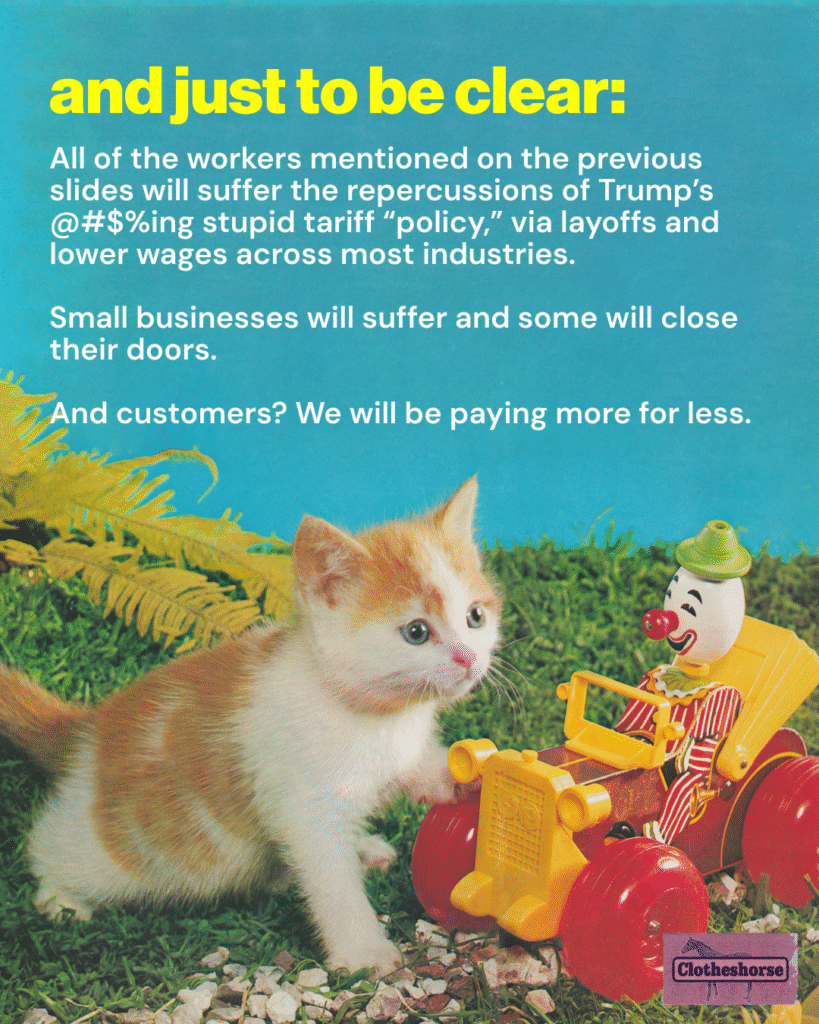
And just to be clear...All of the workers mentioned on the previous slides will suffer the repercussions of Trump’s @#$%ing stupid tariff “policy,” via layoffs and lower wages across most industries. Small businesses will suffer and some will close their doors. And customers? We will be paying more for less.

When you add it all up…

Fast fashion (and it’s “low” prices) seem like a scam!
  • The clothes aren’t actually a good deal because the retailers are cutting every corner to make them cheap.
  • The clothes are not INTENDED to last because with prices so low, retailers have to sell as much clothing as possible, as often as possible in order to keep the billion dollar industry rolling. Clothes that last a long time disrupt the model of more and more, over and over.
  • You just can’t make clothes this cheap and pay your workers a living wage. There’s literally not enough money changing hands to make it make sense. That’s why greenwashing campaigns never touch on garment workers and a living wage. They don’t want you to know that they don’t intend to change the status quo
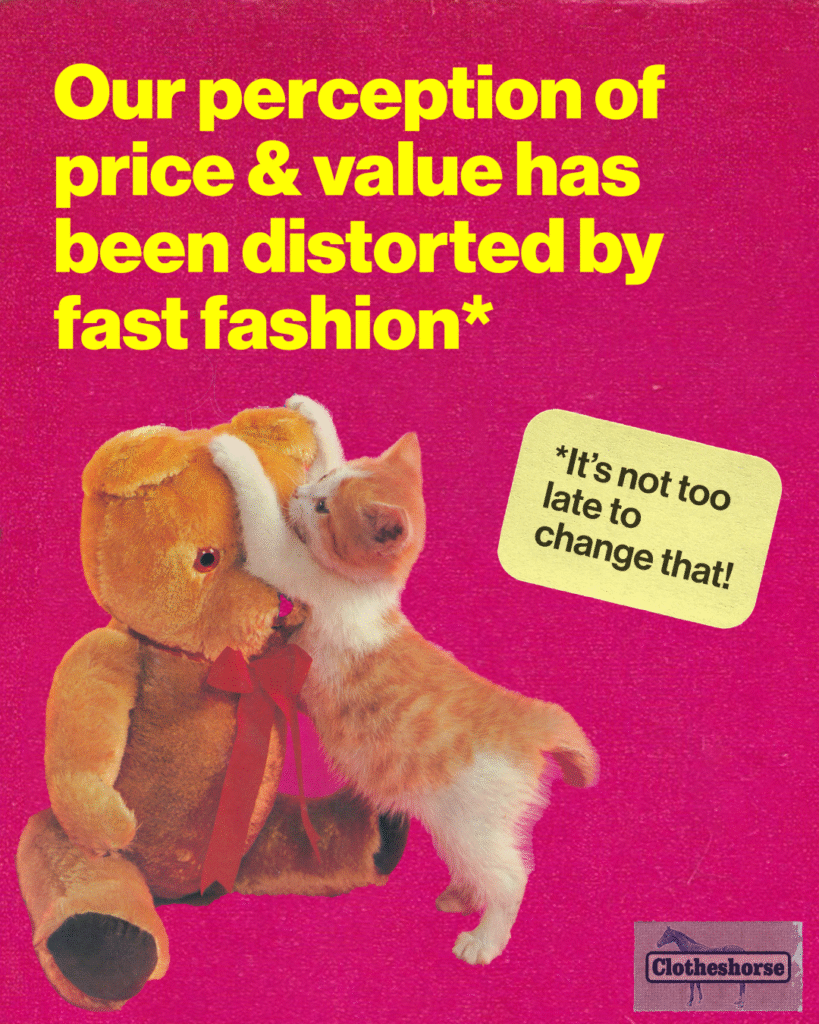
Our perception of price & value has been distorted by fast fashion. It's not too late to change that!

Want to Support Amanda's Work on Clotheshorse?

If you want to share your opinion/additional thoughts on the subjects we cover in each episode, feel free to email, whether it’s a typed out message or an audio recording:  [email protected]

Clotheshorse is brought to you with support from the following sustainable small businesses:

Slow Fashion Academy is a size-inclusive sewing and patternmaking studio based in Philadelphia, Pennsylvania, founded by designer and fashion professor Ruby Gertz. Ruby just launched CLO3D for Custom Fit: a 12-week beginner-friendly online course in virtual patternmaking with CLO3D software. Instead of making sample after sample, you can now customize avatars that match your real body measurements and fit-test garments virtually—before cutting into a single piece of fabric. You can also work from your pre-existing paper or PDF patterns! 
This course is designed to get you over the initial hump to working confidently in the program. It includes 300+ bite-size video lessons spaced out over 12 weeks, weekly live Q&A calls for accountability, a custom body scan to use as a you-sized virtual dress form, and a super supportive community of like-minded designers that are all learning together in a cohort. Perfect for indie patternmakers, emerging designers, or anyone who wants to design clothes that actually fit their one-of-a-kind body.
 
Learn more about the course, as well as our in-person sewing and patternmaking workshops at www.slowfashion.academy.

Deco Denim is a startup based out of San Francisco, selling clothing and accessories that are sustainable, gender fluid, size inclusive and high quality–made to last for years to come. Deco Denim is trying to change the way you think about buying clothes. Founder Sarah Mattes wants to empower people to ask important questions like, “Where was this made? Was this garment made ethically? Is this fabric made of plastic? Can this garment be upcycled and if not, can it be recycled?” Signup at decodenim.com to receive $20 off your first purchase. They promise not to spam you and send out no more than 3 emails a month, with 2 of them surrounding education or a personal note from the Founder. Find them on Instagram as @deco.denim.

Selina Sanders, a social impact brand that specializes in up-cycled clothing, using only reclaimed, vintage or thrifted materials: from tea towels, linens, blankets and quilts.  Sustainably crafted in Los Angeles, each piece is designed to last in one’s closet for generations to come.  Maximum Style; Minimal Carbon Footprint.

Republica Unicornia Yarns: Hand-Dyed Yarn and notions for the color-obsessed. Made with love and some swearing in fabulous Atlanta, Georgia by Head Yarn Wench Kathleen. Get ready for rainbows with a side of Giving A Damn! Republica Unicornia is all about making your own magic using small-batch, responsibly sourced, hand-dyed yarns and thoughtfully made notions. Slow fashion all the way down and discover the joy of creating your very own beautiful hand knit, crocheted, or woven pieces. Find us on Instagram @republica_unicornia_yarns and at www.republicaunicornia.com.

Cute Little Ruin is an online shop dedicated to providing quality vintage and secondhand clothing, vinyl, and home items in a wide range of styles and price points.  If it’s ethical and legal, we try to find a new home for it!  Vintage style with progressive values.  Find us on Instagram at @CuteLittleRuin.