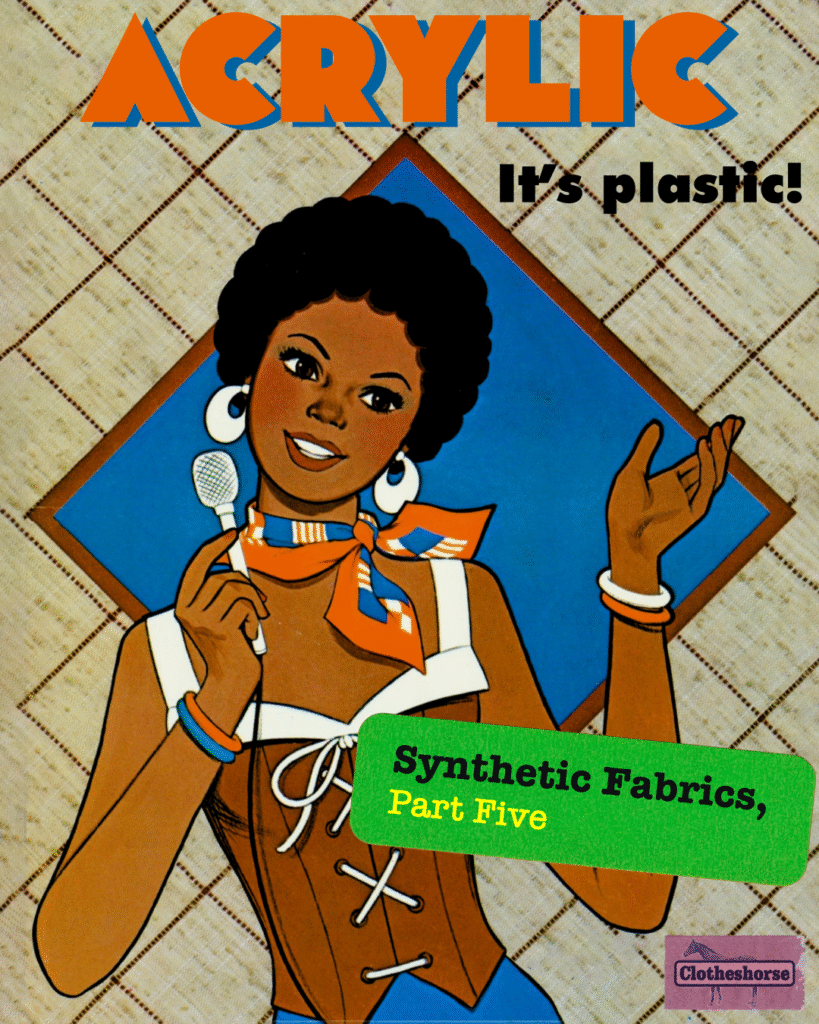
Some real talk as someone who has managed the sweater category at several brands: most sweaters, scarves, gloves, hats, etc for sale in stores right now contain a blend of acrylic and other fibers. Often (but definitely not always) wool, cashmere, or alpaca are a part of those blends, but one thing I’ve learned the hard way is that consumers say they want sweaters made of natural fibers, but then won’t buy them because they feel too rough, itchy, or heavy. Yes, believe it or not…many customers gravitate toward acrylic without even knowing it! Furthermore, acrylic and acrylic blends can be washed and brushed to make them super soft, cozy, and appealing.
That said, acrylic is not a good friend. It pills SO MUCH. If you wash it with other garments that are different colors, the lint from those will attach itself to the acrylic pills and make your sweater look really gross. Acrylic is highly flammable, so it MUST be treated with flame retardants in order to be safely sold. Yes, retailers really test the flammability of these items in order to avoid future lawsuits. And yes, I have worked on styles in the past that failed the flame test!
Acrylic is not biodegradable, it is virtually unrecyclable, and its production has a negative health impact on both the workers making it and the people living in the area around the factory.
Yet customers vote for it time and time again….because they just don’t know! So…READ THOSE LABELS! You can’t spot acrylic by hand feel. You can’t identify it by price (yep, acrylic blends are being sold at a wide range of prices). And you can’t assume that a garment is not acrylic and made of natural fibers just because you bought it at a specific store. Acrylic is everywhere and if you don’t want it in your life, get ready to read some labels inside clothes!
That said…DON’T ABANDON YOUR ACRYLIC CLOTHING! It’s going to be hanging out on this planet for centuries, so let’s get the maximum use out of it. The same goes for any acrylic yarn you’ve got stashed away in your house. I used a bunch of thrifted acrylic yarn to create decorative tassels in my bedroom.
Acrylic was developed in the 1940s by DuPont as part of its plan to dominate the textile market with its new synthetic fibers. Acrylic was intended to be a replacement for wool.
It is considered one of the least breathable fabrics, so it is often used for cold weather apparel and accessories (think sweaters, gloves, scarves) and hoodies/sweatpants. See also: yarn for crafts.
It all begins with the acrylonitrile polymer polyacrylonitrile, which is made by combining propylene, ammonia, and air. Exposure to these chemicals during the production process can cause health issues for workers.
Next the polyacrylonitrile is dissolved with a powerful chemical solvent.
The resulting gel-like material is then extruded using a spinneret. Then the fibers are spun in either a chemical solvent or stream of heated gas. The fibers are stretched, wrapped, and loaded on to bobbins.
Often acrylic is blended with other fibers, like wool, alpaca, and polyester.
On one hand, acrylic has high heat retention, meaning that it makes you feel warm. But that heat retention is due to low breathability, which can make you feel sweaty and gross.
Its texture can make it irritating to the skin for many people.
It is prone to pilling, which can shorten the life of garments and accessories
It is not biodegradable and very difficult to recycle/rarely recycled
It is highly flammable and easily melted.
Because acrylic is so flammable, it requires treatment with flame retardants.
Acrylic clothing is a major source of microplastics in the ocean. A team at Plymouth University found that acrylic garments released nearly 730,000 microplastic particles per wash, five times more than polyester-cotton blend fabric, and almost 1.5 times as many as polyester.
The production of acrylic uses a great deal of energy and water.
And once again, acrylic is not biodegradable and it is difficult to recycle. It is often blended with other fibers, rendering it completely unrecyclable.
According to the CDC, acrylonitrile (the “origin” of acrylic) is “harmful to the eyes, skin, lungs, and nervous system.” Most people don’t have to worry about exposure to the chemical…unless they live near a factory where it is created or waste is dumped.
But guess what? A lot of people DO live near places like that, but because they have less money or aren’t white, they tend to be unseen.
And lest you think acrylonitrile is produced “somewhere else,” the U.S. is actually a major exporter of it, producing about 2 billion pounds of it each year.
Acrylic is another example of just how fast fashion (and really “fast everything”) forces people with limited access and economic means to be a part of the suffering of other humans, sometimes on the other side of the world, sometimes in their own community. And yes, that should make you angry.
First off, DON’T JUST DITCH YOUR ACRYLIC CLOTHING/YARN/ETC! Remember, it’s going to be hanging out on this planet for centuries, so let’s get the maximum use out of it.
That means taking care of it. Washing it carefully (details on another slide). Mending it when needed. Mindfully rehoming it when you’re done with it. Do you best to NOT lose gloves, socks, leg warmers, and other things that contain acrylic. But don’t be too hard on yourself when you do lose something. Life happens and we’re doing the best we can!
Acrylic yarn is very accessible in terms of both price and availability. If making something makes you happy, and acrylic yarn is what you can get…then go for it!
But there are ways to mitigate the impact of your yarn use:
Consider shopping secondhand for yarn at thrift stores, creative reuse shops, yard sales, etc. Or have a “yarn stash” swap with your friends.
Don’t hoard yarn. Yes, I know this is hard. But if yarn just sits on a shelf or a bin for years collecting dust, isn’t that a waste of resources and potential?
Acrylic is kind of the Goldilocks of the synthetic fabrics world. It’s very sensitive to water temperature! It has to be just right…
100% acrylic garments can literally melt in hot water. And in cold water, they can become stiff and inflexible. Warm water is best for 100% acrylic. If you must use the dryer, dry on the lowest setting.
Wash acrylic blends in cold water. Dry on the lowest setting. Use a microplastic trapping ball or bag.
And TBH, handwashing/drying flat is always the best option.
FUN FACT: In the United States, brands are required to include fabric content and care labels in every garment. So check those out!
Acrylic is SO COMMON in sweaters and other cold weather knits and…you can’t spot it by just feeling the garment. In fact, yarns made of blends of acrylic, wool, and other fibers are often softer and more appealing to consumers than 100% wool.
Your list may vary (because values are extremely personal):
Amazon, Walmart, Target, SHEIN, Temu…basically any company with opaque supply chains and labor issues.
Companies like Trader Joes and Starbucks who engage in anti-union tactics.
Brands who refused to #PayUp on orders cancelled in 2020: all the URBN brands, American Eagle, Aerie, TJ Maxx, Home Goods, Marshalls, Ross, Kohl’s, Forever 21, and more.
Any company with an obvious political stance that does not fit my own values. Yeah, that means I won’t be renting a truck from the U-Haul place in my town with a massive Trump sign. Definitely not buying cookies from this terrible viral cookie place here in Lancaster County.
That’s just the beginning of my list. Most importantly, I try to shop secondhand first. And when I can’t do that, I start by looking for something local from a small business.
My thought process as I make decisions about where and when to shop:
First things first: do I really need this? Is it more of a want?
If it’s clothing: why do I need it? When and how will I wear it? Am I prepared to care for it properly and mend it when necessary?
If it’s not clothing, where will it live in my home? Can I see myself using this thing for a long time?
Can I find it secondhand? Often I’ll look online and in person for this item, for days, weeks, even months (if it is not urgent).
If I can’t find it secondhand, can I find it from a local small business? That means my money will stay within the community.
If I can’t find it locally, can I find it elsewhere from a small business? My money has more immediate impact with a small business.
If I still can’t find it, but definitely need it…then I’ll buy it elsewhere.
Images for this post are from the 1972 Lydia paper doll book.
If you want to share your opinion/additional thoughts on the subjects we cover in each episode, feel free to email, whether it’s a typed out message or an audio recording: amanda@clotheshorse.world
Deco Denim is a startup based out of San Francisco, selling clothing and accessories that are sustainable, gender fluid, size inclusive and high quality–made to last for years to come. Deco Denim is trying to change the way you think about buying clothes. Founder Sarah Mattes wants to empower people to ask important questions like, “Where was this made? Was this garment made ethically? Is this fabric made of plastic? Can this garment be upcycled and if not, can it be recycled?” Signup at decodenim.com to receive $20 off your first purchase. They promise not to spam you and send out no more than 3 emails a month, with 2 of them surrounding education or a personal note from the Founder. Find them on Instagram as @deco.denim.
Selina Sanders, a social impact brand that specializes in up-cycled clothing, using only reclaimed, vintage or thrifted materials: from tea towels, linens, blankets and quilts. Sustainably crafted in Los Angeles, each piece is designed to last in one’s closet for generations to come. Maximum Style; Minimal Carbon Footprint.
Republica Unicornia Yarns: Hand-Dyed Yarn and notions for the color-obsessed. Made with love and some swearing in fabulous Atlanta, Georgia by Head Yarn Wench Kathleen. Get ready for rainbows with a side of Giving A Damn! Republica Unicornia is all about making your own magic using small-batch, responsibly sourced, hand-dyed yarns and thoughtfully made notions. Slow fashion all the way down and discover the joy of creating your very own beautiful hand knit, crocheted, or woven pieces. Find us on Instagram @republica_unicornia_yarns and at www.republicaunicornia.com.
Cute Little Ruin is an online shop dedicated to providing quality vintage and secondhand clothing, vinyl, and home items in a wide range of styles and price points. If it’s ethical and legal, we try to find a new home for it! Vintage style with progressive values. Find us on Instagram at @CuteLittleRuin.