This is a post about synthetic fabrics that are substitutes for animal-derived versions: suede and fur. Next week I’m going to talk about pleather (faux leather).
Sometimes faux fur and suede are made from recycled plastics. But they are still not biodegradable, they shed microplastics, and they will live in the landfill for centuries. Compostable/biodegradable options are in development, but no brands are using them. I suspect that is because these fabrics are “too expensive” to fit into fashion’s aggressive pricing model.
Regardless of what you choose to wear, I want you to recognize that it is not disposable (nothing is) and make it last/get as much wear out of it!
This is not a post about the ethics of fur and leather. I am not covering real fur/leather in this post because this is part 6 of a series about synthetic fabrics. This is intended as a resource for learning more about synthetic fabrics and how to mitigate their impact on the planet.
I am always super nervous about discussing fake leather, fur, and suede because these conversations can bring out the worst in people. In 2021, I posted about “vegan leather” being plastic and I received a litany of hateful messages, including some wishing for my death and torture. Someone else found my phone number (yes, my personal phone) on the internet and sent me threatening texts. If you know me IRL, you know I’m obsessed with animals and I’ve been volunteering in animal rescue since I was a teenager. I personally do not buy new leather and fur (it doesn’t align with my values), but I do have a blue suede coat from the 70s that I have been caring for and repairing for years and years. I also have a denim coat with a faux fur collar that I brush before I leave the house.
Thanks in advance for being respectful and constructive.
When we talk about the reality of “vegan” textile options like faux fur or faux suede, it is not a “gotcha” moment attack on veganism. A plant-based diet (if done thoughtfully) can have a lower environmental impact than diets that contain animal products.
What you eat is a very personal decision…and clothing should be approached the same way!
This post is part of a longer series unpacking and explaining synthetic fabrics. Many (but not all) cruelty free fur, suede, and leather alternatives are synthetic materials, made with fossil fuels.
Faux fur is made of synthetic polymers, including acrylics, modacrylics, and polyester (sometimes a blend of all of these or two of them). These polymers are made of fossil fuels and require a great deal of energy and water for creation.
The polymers can be either a powder or pellet form. They are melted down and spun into airy fibers in a process that is similar to to making cotton candy.
The fibers are woven through a fabric backing (usually polyester) and then sheared/trimmed.
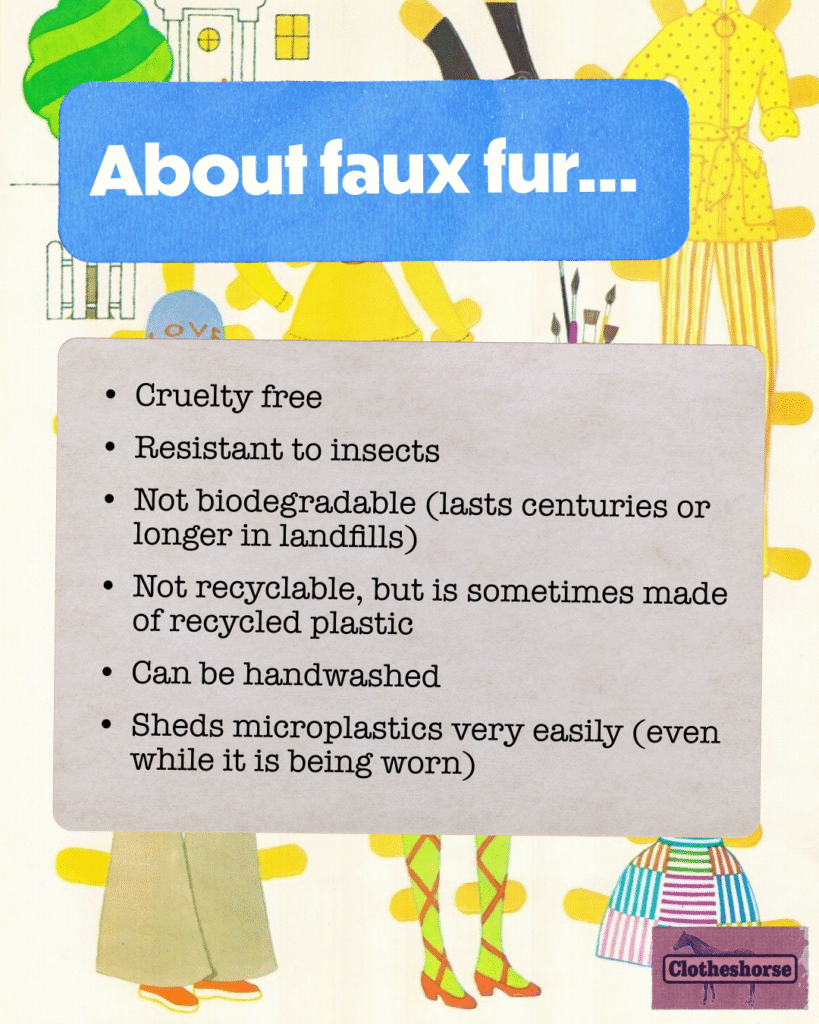
Brush it before you leave the house! This will catch any loose “hairs” (microplastics). Dispose of them in the trash can.
Hand wash it and hang dry/dry flat. Do NOT put it in the dryer (it will melt). Keep it out of the sun while it dries.
If you send it to the dry cleaner, ensure that the dry cleaner knows how to properly clean faux fur.
Repair/replace loose buttons and patch the lining.
Last year a company called ECOPEL launched a 100% plant-based, fully biodegradable faux fur material called FLUR.
It is constructed from a polymer made from regenerated vegetable oil.
This option is not currently in use by any brands/retailers, but that could change. In the past ECOPEL has primarily worked with luxury brands, so it will be quite some time until this is the norm for all brands.
“Vegan suede” or faux suede is actually microfiber fabric, made of a blend of synthetic fibers like polyester, nylon, and/or polypropylene (a thermoplastic).
Pellets of one of the plastics listed above are melted down and extruded into super thin microfilaments. It is then woven/knit into fabric. Sometimes it is submerged in a dye or bleach bath with an alkaline solution to split the fibers, creating a more finely textured surface.
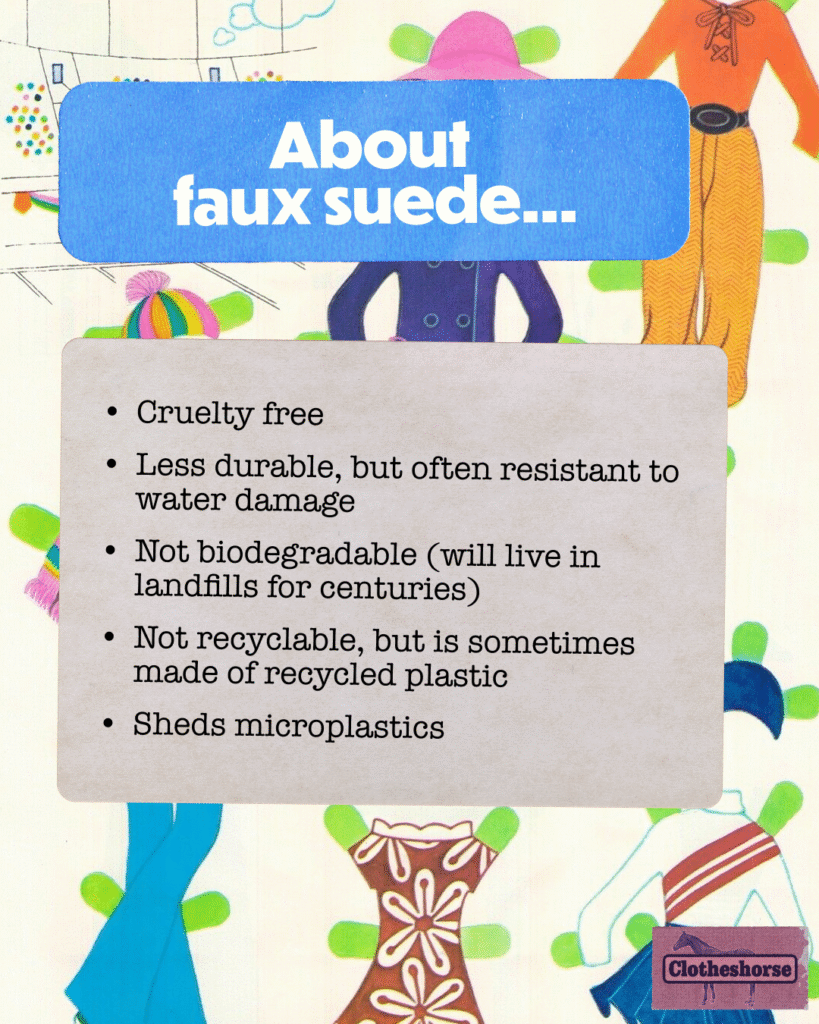
DO NOT PUT FAUX SUEDE IN THE DRYER.
Handwash/hang dry is ideal, but do not dry it in the sun.
Use a lint roller to catch any loose fibers (microplastics) before each wear.
Extend the life of the garment by repairing/replacing loose buttons, holes, tears, and frayed linings.
Ultimately whether you choose real fur/suede or the faux version, it’s a personal choice based on your own values and priorities.
Unhappy with the binary of fur/faux fur and suede/faux suede? Then skip them all! Natural fibers like wool and alpaca can provide more warmth and longevity. Want clothes that are completey free of animals? Opt for cotton, hemp, bamboo, etc.
No matter what you choose to wear, MAKE IT LAST! Because nothing is disposable.
If you want to share your opinion/additional thoughts on the subjects we cover in each episode, feel free to email, whether it’s a typed out message or an audio recording: amanda@clotheshorse.world
Deco Denim is a startup based out of San Francisco, selling clothing and accessories that are sustainable, gender fluid, size inclusive and high quality–made to last for years to come. Deco Denim is trying to change the way you think about buying clothes. Founder Sarah Mattes wants to empower people to ask important questions like, “Where was this made? Was this garment made ethically? Is this fabric made of plastic? Can this garment be upcycled and if not, can it be recycled?” Signup at decodenim.com to receive $20 off your first purchase. They promise not to spam you and send out no more than 3 emails a month, with 2 of them surrounding education or a personal note from the Founder. Find them on Instagram as @deco.denim.
Selina Sanders, a social impact brand that specializes in up-cycled clothing, using only reclaimed, vintage or thrifted materials: from tea towels, linens, blankets and quilts. Sustainably crafted in Los Angeles, each piece is designed to last in one’s closet for generations to come. Maximum Style; Minimal Carbon Footprint.
Republica Unicornia Yarns: Hand-Dyed Yarn and notions for the color-obsessed. Made with love and some swearing in fabulous Atlanta, Georgia by Head Yarn Wench Kathleen. Get ready for rainbows with a side of Giving A Damn! Republica Unicornia is all about making your own magic using small-batch, responsibly sourced, hand-dyed yarns and thoughtfully made notions. Slow fashion all the way down and discover the joy of creating your very own beautiful hand knit, crocheted, or woven pieces. Find us on Instagram @republica_unicornia_yarns and at www.republicaunicornia.com.
Cute Little Ruin is an online shop dedicated to providing quality vintage and secondhand clothing, vinyl, and home items in a wide range of styles and price points. If it’s ethical and legal, we try to find a new home for it! Vintage style with progressive values. Find us on Instagram at @CuteLittleRuin.