Why (most) new sweaters are kinda garbage (and very low quality).

It all started when most brands adopted the fast fashion business model…


As I have discussed in previous posts, retailers/brands made a major shift in pricing and quality following the 2008 global financial crisis. In the immediate aftermath, retailers sold everything on clearance.

But as the recession continued, retailers found that they could ONLY sell things on sale, while the original fast fashion brands like Forever 21 and H+M were thriving while offering very low prices.

Ultimately, almost every brand/retailer realized they would have to lower their prices…or risk losing their business. They thought it was temporary…but it ended up being permanent. Why? Because customers expected clothing to be cheap. And now, clothes cost less than they did in the 1990s.

Brands raced to the bottom, with endless sales and permanent promos.


Big brands with higher prices took a sneakier path to the bottom:  they knew that putting prices like $1.90 or even $19.90 would ruin the image of their brands as more “premium,” as superior to the other fast fashion brands. 
But they also knew that customers couldn’t really afford those higher prices…or at least, customers were unwilling to pay higher prices. So what was the brilliant workaround?

Keep the higher prices on the tags, but plan to sell most of the inventory on sale.  And if they planned that in advance, they could architect the item to sell on sale and be just as profitable as a full price item had been in the past.

Making the math MATH


Let’s say that in 2007, a brand had been selling sweaters for $88 with no problem. This meant they could pay up to $30 and still be pretty profitable.


But now, realistically most of those sweaters would sell for $40  How to stay profitable at that level?


Buy dresses that cost $17 to make, put the $88 price tag on them, then sell them at 50-60% off.


So yeah, the $88 sweater is a different garment than what it was in 2007.  When we talk about a serious drop off in quality in these mass mall brands, this is what caused it.


It’s confusing, right? Because the price looks the same (and you think you got a good deal)…But did you?


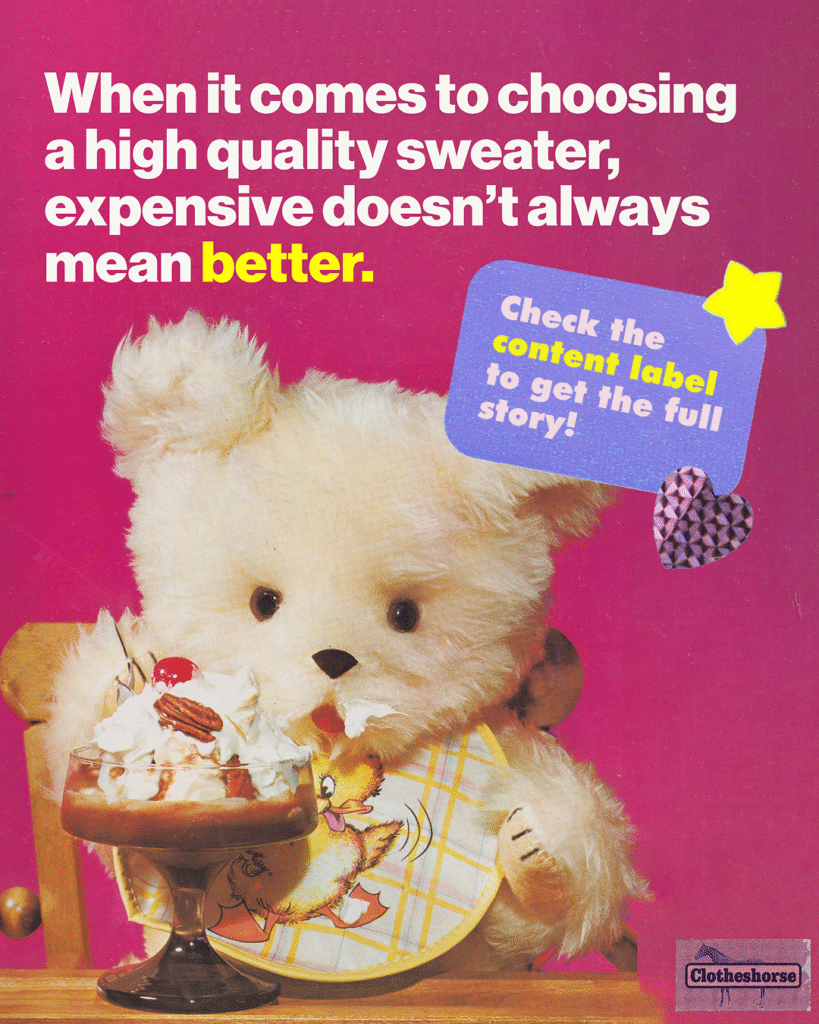
The price on the tag is more of a branding moment than an indicator of quality or nice yarn. You cannot spot quality by price.
 

How fast fashion makes a highly profitable sweater…

  • It all starts with the yarn choice. In most cases, synthetic blends are far less expensive. Most new sweaters consist of a blend of several fibers, including polyamide (synthetic fiber), acrylic (synthetic fiber), and nylon (synthetic fiber). In many cases, natural fibers are part of these complex blends, including wool, alpaca, cashmere, and cotton. The complexity of these blends currently render most of these yarns completely un-recyclable and non-biodegradable. However, this is an industry that always prioritizes easy profit over long term impacts.
  • We tend to think of the 1970s as the golden era of polyester, but the reality is that we are living in a polyester era right now! Synthetic fibers are less expensive to make and they also weigh less. Yarn pricing for garments is measured by weight, so lighter, loftier fibers = lower cost.
  • Often buyers and designers will work with production to find a yarn that feels/looks good, while also being inexpensive. They are under pressure to meet extremely unrealistic targets for price and profitability
  • Often swapping into lower price yarns is not enough to meet the aggressive pricing and profitability targets set by upper management. At this point, design and production will explore reducing the tension and increasing stitch size. This will make the sweater faster to produce (time=money) and lighter in weight (more savings).
  • That still might not be enough to make the pricing work. So now the team will work on every other aspect of reducing the price. This means making even more revisions: removing details like buttons and embellishment, reducing the length of the body and/or sleeves, or even swapping from a knit body into a lower quality cut and sew knit fabric (often called “swit”).
  • Let’s say this new, highly revised sweater is a bestseller. Next year the team will bring it back, but it will have to be even more profitable, so more details will be cut and cheaper yarn will be sourced. However, the price for the customer will remain the same (or increase). Do this a few years in row, and you end with a much lower quality sweater at the end.

Why can’t we just switch all new sweaters to natural fibers?


Like a lot of things around here…IT’S COMPLICATED!
  • Customers say they want natural fibers like wool and alpaca, but they generally prefer the hand feel of synthetic fibers. Yep, it’s been the bane of my existence as a buyer. Customers almost always opt for sweaters that feel soft, cozy, and airy, which means bringing in nylon, acrylic, and polyamide blends. They often skip the scratchiness and density of natural fibers.
  • Next, natural fibers aren’t the right fit for everyone. Many of us are concerned about the ethics of wool and alpaca, especially on a mass scale. And others are sensitive to the texture of wool.
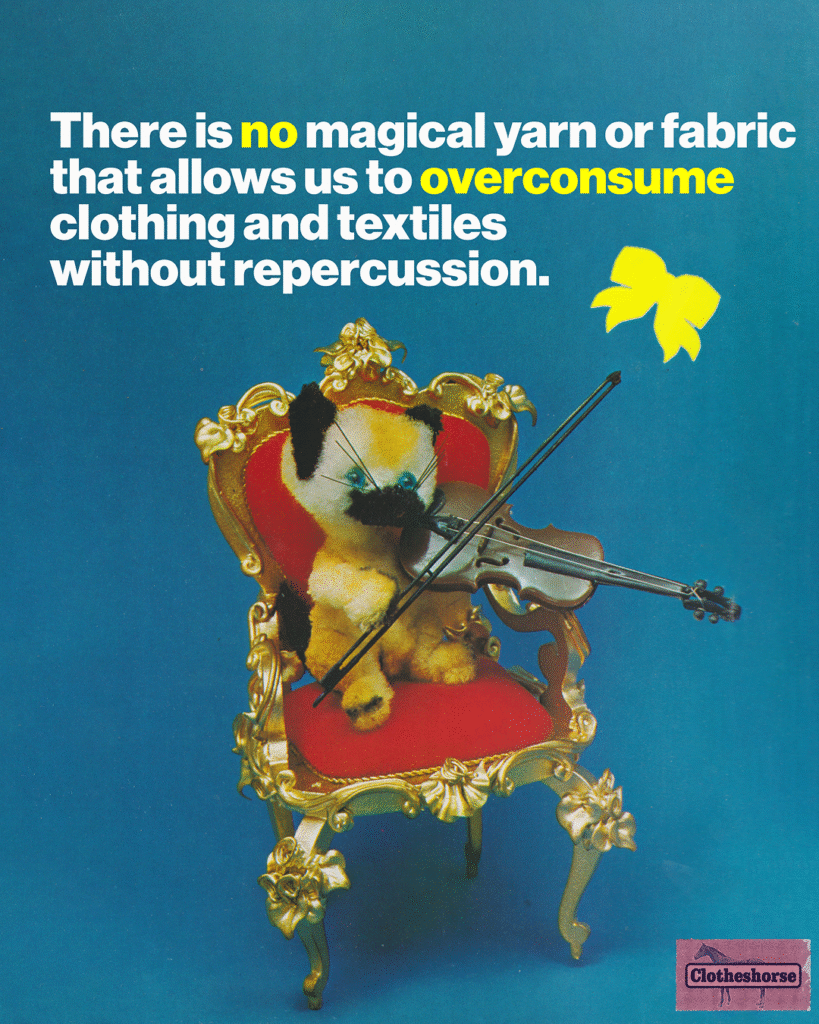
  • Lastly, if we continue to overconsume clothing (and sweaters) at the current rate, a shift to only natural fibers would be even more damaging to our planet, requiring an unsustainable amount of farmland, water, and pesticides.

What YOU can do!

  • Choose carefully. Read care and content labels before making any purchase. When shopping online, look for this information on the product page. Skip retailers who do not share this info easily. Use this information to pick sweaters that you plan to wear for a long time, regardless of fiber content. It’s okay to opt for synthetic fibers if you know you’re going to wear something for years.
  • Buy less. Yep, it’s the unsexy answer but the reality is…we are overconsuming clothing, including sweaters. The first question to ask while shopping: Do I really need another sweater?
  • Shop secondhand first as often as possible. It won’t always be possible, but if you are looking for higher quality sweaters, look for those that were made before 2008.
  • Make your sweaters last by caring for them. Launder carefully (and infrequently). NEVER put them in the dryer. Fold them rather than hanging them. Use a sweater comb or shaver to occasionally remove pills.
  •  

Want to lear more about synthetic fibers? Check out the Clotheshorse Guide to Synthetic Fibers & Fabrics.

Want to Support Amanda's Work on Clotheshorse?

If you want to share your opinion/additional thoughts on the subjects we cover in each episode, feel free to email, whether it’s a typed out message or an audio recording:  [email protected]

Clotheshorse is brought to you with support from the following sustainable small businesses:

Slow Fashion Academy is a size-inclusive sewing and patternmaking studio based in Philadelphia, Pennsylvania, founded by designer and fashion professor Ruby Gertz. Ruby just launched CLO3D for Custom Fit: a 12-week beginner-friendly online course in virtual patternmaking with CLO3D software. Instead of making sample after sample, you can now customize avatars that match your real body measurements and fit-test garments virtually—before cutting into a single piece of fabric. You can also work from your pre-existing paper or PDF patterns! 
This course is designed to get you over the initial hump to working confidently in the program. It includes 300+ bite-size video lessons spaced out over 12 weeks, weekly live Q&A calls for accountability, a custom body scan to use as a you-sized virtual dress form, and a super supportive community of like-minded designers that are all learning together in a cohort. Perfect for indie patternmakers, emerging designers, or anyone who wants to design clothes that actually fit their one-of-a-kind body.
 
Learn more about the course, as well as our in-person sewing and patternmaking workshops at www.slowfashion.academy.

Deco Denim is a startup based out of San Francisco, selling clothing and accessories that are sustainable, gender fluid, size inclusive and high quality–made to last for years to come. Deco Denim is trying to change the way you think about buying clothes. Founder Sarah Mattes wants to empower people to ask important questions like, “Where was this made? Was this garment made ethically? Is this fabric made of plastic? Can this garment be upcycled and if not, can it be recycled?” Signup at decodenim.com to receive $20 off your first purchase. They promise not to spam you and send out no more than 3 emails a month, with 2 of them surrounding education or a personal note from the Founder. Find them on Instagram as @deco.denim.

Selina Sanders, a social impact brand that specializes in up-cycled clothing, using only reclaimed, vintage or thrifted materials: from tea towels, linens, blankets and quilts.  Sustainably crafted in Los Angeles, each piece is designed to last in one’s closet for generations to come.  Maximum Style; Minimal Carbon Footprint.

Republica Unicornia Yarns: Hand-Dyed Yarn and notions for the color-obsessed. Made with love and some swearing in fabulous Atlanta, Georgia by Head Yarn Wench Kathleen. Get ready for rainbows with a side of Giving A Damn! Republica Unicornia is all about making your own magic using small-batch, responsibly sourced, hand-dyed yarns and thoughtfully made notions. Slow fashion all the way down and discover the joy of creating your very own beautiful hand knit, crocheted, or woven pieces. Find us on Instagram @republica_unicornia_yarns and at www.republicaunicornia.com.

Cute Little Ruin is an online shop dedicated to providing quality vintage and secondhand clothing, vinyl, and home items in a wide range of styles and price points.  If it’s ethical and legal, we try to find a new home for it!  Vintage style with progressive values.  Find us on Instagram at @CuteLittleRuin.