This is part three in an ongoing series about synthetic fabrics. Find part one here and part two here.
There are brands that have built their entire business off of RECYCLED POLYESTER (looking at you, Parade)! From a marketing perspective, recycled polyester is SO EASY to run with…minimal effort, minimal cost and boom! An illusion of sustainability and responsibility.
And to be clear: Recycled polyester (rPET) fabric is made from other recycled plastics, not recycled polyester clothing. Just saying that here because I know the language can get confusing!
rPET is a complicated topic. I try to take complicated things and make them more digestible/understandable, but there is no way that I will EVER capture it all in little post. I recommend doing more reading and research on your own. Want somewhere to start? Read “Is Recycled Polyester Green or Greenwashing?” from Common Objective.
We cannot (and I mean CANNOT) recycle our way out of the environmental crisis that fast fashion has created. Any brand that tells you otherwise is just trying to sell you something. Recycling requires energy, so while it uses less energy than making new polyester, there is still an impact. There is a great NatGeo video that shows the process of making recycled polyester. While it’s impressive that someone invented a way to do this, I just see the gas used to drive the materials from facility to facility and the electricity used to run those machines!
When you are done using a garment made of rPET, it goes off to the landfill (unless you pass it on to another person) because it cannot be recycled into something else. Rather than developing a way to make fabric out of plastic bottles, the industry should be focusing more research on recycling fabric into fabric. But even then…WE MUST BUY LESS NEW CLOTHING.
All of this recycled fabric talk is often a distraction from another major issue that fashion does not want to change: the exploitation of workers. IT’S NOT SUSTAINABLE IF SOMEONE DIDN’T GET PAID (or got a UTI because they aren’t allowed to take bathroom breaks).
Okay that’s the end of my rant. Let’s dig into what rPET is and how it is made…
There is no miracle fabric that makes it “okay” to buy something, wear it once or twice (or never), then trash/donate it…and buy something new to replace it.
And because fast fashion is a business model that relies on selling us as much stuff as possible, as often as possible…it is in the industry’s best interest to lead us to believe that a “miracle fabric” does exist.
rPET (recycled polyester) is one of the fake “miracle fabrics” that fashion likes to sell us because we will buy more than we need, thinking that we are doing a “good” thing.
It’s a better alternative to new polyester: rPET requires 59% less energy to create than virgin polyester, and the carbon footprint to produce it is 79% smaller . And right now, some things kinda have to be made out of synthetic fibers (swimwear, bras, activewear) because technology hasn’t unlocked a better option…yet.
Polyester accounts for 60% of total PET production each year (more than plastic bottles), so it’s good to have a new, less energy intensive option.
It keeps plastic out of the landfills. Only 9% of our plastic is recycled each year! So it could raise recycling rates.
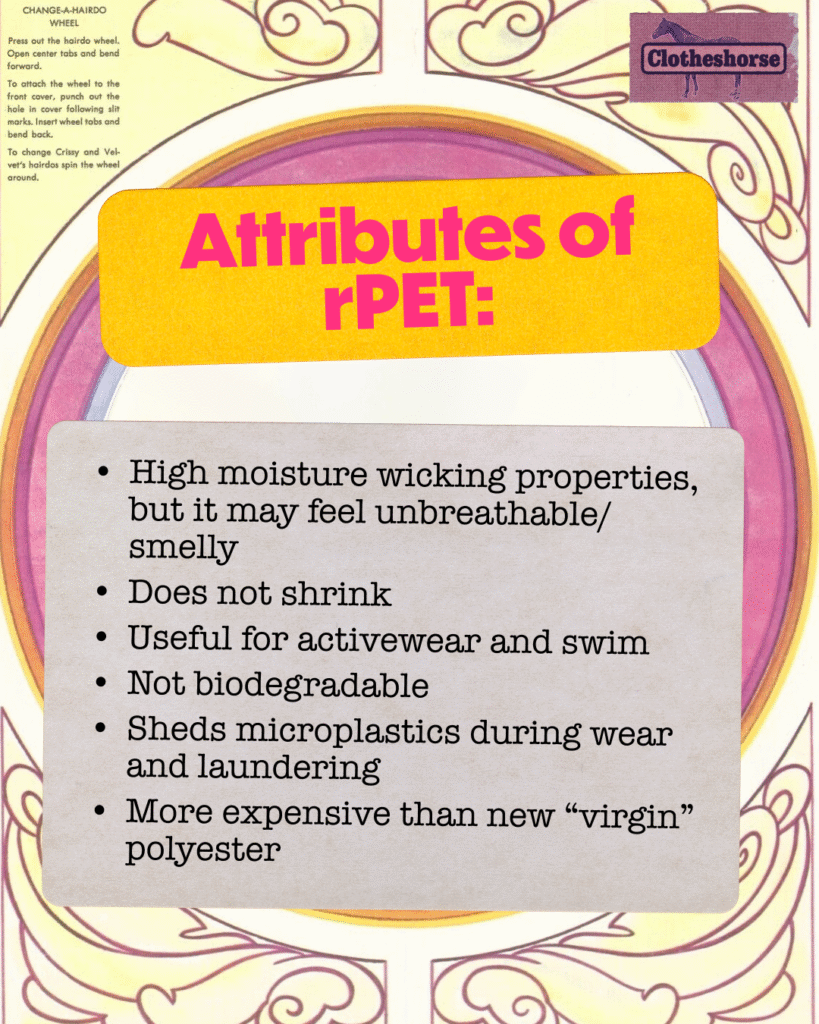
Most clothing made of rPET is not recyclable. Often the rPET fibers are blended with others, making recycling impossible. This could change over time, but we aren’t there yet.
Even still, rPET/PET can only be recycled 1 or 2x before the fibers degrade and are no longer useful. Plastic is not a truly circular material.
Like regular polyester, laundering rPET clothing releases microplastics into the water and ultimately, the oceans.
There is concern that pulling plastic bottles from one waste stream (packaging) to another (textiles) encourages more plastic use by consumers. Like, “Oh, I’ll keep using disposable water bottles because they can be turned into leggings!”
It also disincentivizes the textile/fashion industry from working on finding truly sustainable fabric options, reducing its textile waste, and (most importantly) making its business model less dependent on overconsumption.
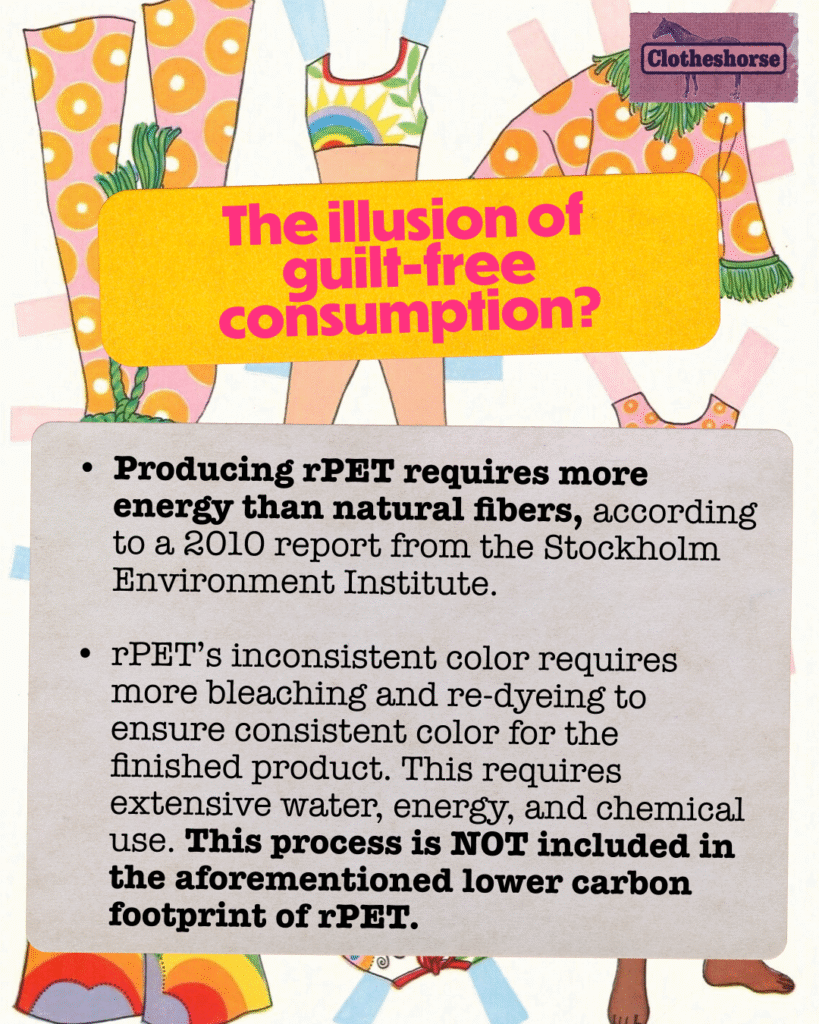
rPET requires energy, water, and chemicals to create, so it still has an impact on the planet.
It is often not recyclable, so most discarded rPET clothing will end up in the landfills, where it will take centuries to break down.
rPET is often used as a ploy by retailers to distract us from their other wasteful practices and horrible treatment of workers.
rPET sheds microplastics, so change up your laundry routine (see part one of this series).
What we buy and wear has a lot of emotions wrapped up in it. And yes, we shop more when we are feeling anxious and sad. When we talk about sustainability, we also need to talk about our feelings.
So here’s the thing: you’re not a bad or selfish person if you buy/wear polyester (or rPET) clothing. You’re not a “better” person if you don’t. The current system doesn’t set us up for success. If you need a swimsuit, sports bra, or leggings…they are probably going to be poly/rPET.
Here’s what I recommend: don’t buy polyester things that you don’t need. Like, why does rPET underwear exist? Don’t buy MORE than you need. Don’t get a lingerie or leggings subscription. Just buy less new stuff!
Make your clothes last by laundering them carefully and mending them when needed.
Use a microplastic capturing bag or ball when you do laundry.
Be a proud outfit repeater! The most sustainable thing you can do is…wear the clothes you already have!
Consider shopping #SecondhandFirst.
Thoughtfully rehome your clothing when you no longer want/use it. Skip the trashcan and the donation bin in favor of your local Buy Nothing Group or hosting a clothing swap.
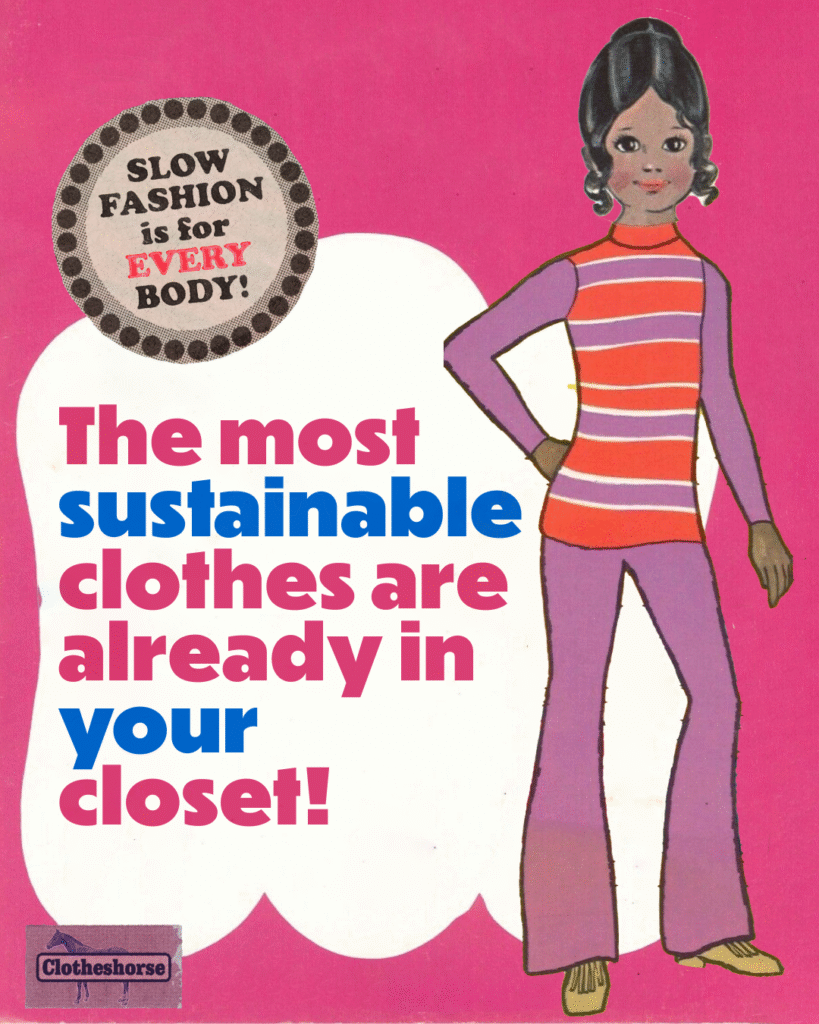
The images in this post come from the 1971 paper doll book Crissy and Velvet.
If you want to share your opinion/additional thoughts on the subjects we cover in each episode, feel free to email, whether it’s a typed out message or an audio recording: amanda@clotheshorse.world
Deco Denim is a startup based out of San Francisco, selling clothing and accessories that are sustainable, gender fluid, size inclusive and high quality–made to last for years to come. Deco Denim is trying to change the way you think about buying clothes. Founder Sarah Mattes wants to empower people to ask important questions like, “Where was this made? Was this garment made ethically? Is this fabric made of plastic? Can this garment be upcycled and if not, can it be recycled?” Signup at decodenim.com to receive $20 off your first purchase. They promise not to spam you and send out no more than 3 emails a month, with 2 of them surrounding education or a personal note from the Founder. Find them on Instagram as @deco.denim.
Selina Sanders, a social impact brand that specializes in up-cycled clothing, using only reclaimed, vintage or thrifted materials: from tea towels, linens, blankets and quilts. Sustainably crafted in Los Angeles, each piece is designed to last in one’s closet for generations to come. Maximum Style; Minimal Carbon Footprint.
Republica Unicornia Yarns: Hand-Dyed Yarn and notions for the color-obsessed. Made with love and some swearing in fabulous Atlanta, Georgia by Head Yarn Wench Kathleen. Get ready for rainbows with a side of Giving A Damn! Republica Unicornia is all about making your own magic using small-batch, responsibly sourced, hand-dyed yarns and thoughtfully made notions. Slow fashion all the way down and discover the joy of creating your very own beautiful hand knit, crocheted, or woven pieces. Find us on Instagram @republica_unicornia_yarns and at www.republicaunicornia.com.
Cute Little Ruin is an online shop dedicated to providing quality vintage and secondhand clothing, vinyl, and home items in a wide range of styles and price points. If it’s ethical and legal, we try to find a new home for it! Vintage style with progressive values. Find us on Instagram at @CuteLittleRuin.